
Gutta Percha – The ‘Specialist’ Dental Filling Material
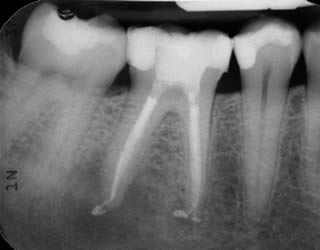
Used at our Wickford dental practice for one procedure only, it contributes heavily to its successful outcome.
Perhaps you have never heard of ‘gutta percha’. This is not exactly surprising. Most people know of only two types of dental fillings and those are the well established amalgam filling and the more modern and aesthetically pleasing white coloured fillings. There is another type, known as GI (glass ionomer) fillings but this is used quite rarely and only for specific purposes.
So what procedure do we use gutta percha for? The answer is for a root canal procedure, and we will look at that, and the filling’s role in it, in today’s Cygnet Dental Practice blog.
What is ‘gutta percha’?
Gutta percha is a type of latex that comes solely from the Malaysian Palaquium tree and is biologically inert and thermoplastic which essentially means that it is pliable and moldable when it is heated but then returns to a solid state once it has cooled. The reasons for its use in dental fillings will be clearer when we look at the procedure itself.
As an aside, gutta percha has few other uses but, interestingly, was used in 19th century golf balls that were referred to as ‘gutties’. Gutta percha was first used as a trial for temporary dental fillings in the mid 1800s before being more widely produced and used in dentistry later on in the century.
The root canal procedure
This particular treatment is carried out at our Wickford dental sugery when the root canals of a tooth become infected. This most commonly happens when decay is deep within the tooth or where the enamel of the tooth has broken or cracked, allowing harmful bacteria to enter the root canals where the soft pulp material within contains the nerves of the tooth, along with tiny blood vessels. With the nerves being located in this area, it perhaps isn’t hard to understand why this can, at times, be a very painful problem indeed. Once infection in this area of the tooth has occurred, there are only two options available; either extract the tooth or carry out a root canal procedure.
Patient concerns
There is little doubt that the words ‘root canal’ are two words that most patients hope never to hear. Unfortunately, there have obviously been cases in the past that caused this procedure to get its reputation for pain. Most likely this occurred prior to x-rays and even anaesthetics being available. Drilling into an abscess that hadn’t been noticed would understandably be excruciatingly painful, but is this the case today?
The truth is that, prior to a root canal procedure, we will use x-rays and scans to check for any abscesses and if any are found, they will be treated before the root canal procedure begins. The local anaesthetic used these days is very powerful too and the reality is that a root canal procedure should cause no more discomfort than most other invasive dental procedures.
Using the gutta percha
The first step of a root canal procedure is the removal of a section from the top of the tooth so that the canals can be accessed. The infected soft pulp material is then removed and the hollow root canals thoroughly cleaned to remove all bacteria. The gutta percha filling material will then be warmed up so that it is pliable and placed into the hollow canals, taking care that these are sealed fully. The filling will then be hardened to completely seal the tooth and prevent any re-infection.
While gutta percha is a reasonably hard dental filling material once it has cooled down; in most cases, we will add a dental crown on top, both to provide a natural appearance but also to provide extra strength to the tooth.
You will need to exercise a little caution when eating with this tooth as the roots having been removed, means that it will be hard to judge how hard you are biting down. For this reason, we recommend that you avoid biting into hard foods with that tooth to reduce the risk of any damage to it.
We hope that you found today’s blog interesting and perhaps, put your mind at rest about this sometimes feared procedure. For further information about this or any other dental matter, or to book an appointment at our Wickford clinic, please call the Cygnet Dental Practice on 01268 733078 and speak to one of our helpful reception team.